At your service in Chandler
Chandler Generator Permit Hoa Approval
- Permit paperwork handled for you
- HOA approval sorted before install
- Serving Chandler & Gilbert homes
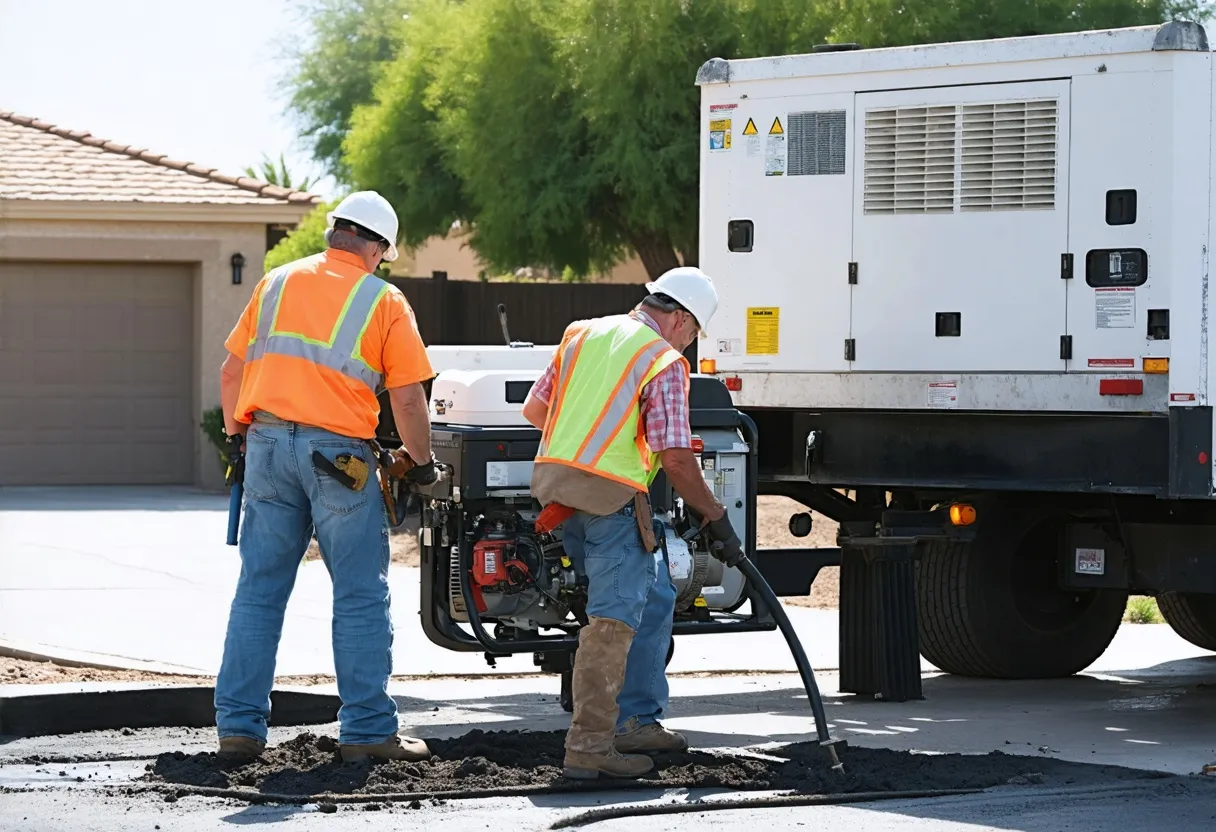
Chandler homeowners shopping for whole-home backup power almost always focus on generator size and installation cost first — and then discover, usually mid-project, that getting cleared to actually run the unit is its own process. The City of Chandler requires an electrical permit before any generator is permanently wired into a home's panel, full stop, regardless of whether the unit sits on a slab in the side yard or bolts onto an existing pad. If your address falls inside one of Chandler's many planned communities — across 85286, 85249, 85248, 85226, 85225, and 85224 — there's frequently a second layer: your HOA's architectural review committee, which can have its own setback, noise, screening, and paint-match rules that have nothing to do with the city's electrical code.
Neither approval guarantees the other. A generator that passes city inspection can still get a violation notice from an HOA that wasn't consulted first, and a design an HOA approves can still get rejected at the city's plan-review desk if load calculations or clearances are wrong. During Chandler-Gilbert's monsoon outage season, that gap is where installs stall — a unit sits wired and unused because one signature is still missing. This page lays out, in order, what gets filed where, so approval and installation finish on the same timeline instead of weeks apart.
How permit and HOA clearance fits into a Chandler generator install
Before any paperwork moves, the installer confirms generator placement, clearances from windows and property lines, and the home's electrical load — details every permit application and most HOA forms will ask for.
The City of Chandler's building division reviews the electrical plan for the transfer switch, panel connection, and fuel or battery setup before work can legally begin, and this filing typically happens in parallel with, not after, any HOA paperwork.
If the property sits inside a homeowners association, the generator's location, screening, and sometimes its sound rating go to the architectural committee for a separate written approval — a step the city does not track or require on its own.
Work begins once the permit is issued; if an HOA has a longer review cycle, scheduling the physical install to land after both sign-offs prevents a finished generator from sitting powered-down while a committee still deliberates.
A City of Chandler inspector confirms the completed wiring and transfer switch match the approved permit plan before the generator is cleared to run — the step that actually turns the installation into usable backup power.
What to have ready before you file
Why permit and HOA delays hit harder during Chandler-Gilbert monsoon season
Chandler sits inside the stretch of the Valley that gets the roughest run of monsoon-driven outages each summer, and Gilbert shares the same weather corridor and the same grid stress. When a storm knocks out power across 85286, 85248, or 85225, the households that already have a generator wired and cleared are running within minutes. The households still waiting on a permit or an HOA letter are running an extension cord to a portable unit, or not running anything at all.
The frustrating part is that the timing gap is rarely about the generator itself. Most delays trace back to one of two things: a permit application that's missing a load calculation or clearance detail the city needs before it will issue, or an HOA submission that went in after the equipment was already ordered instead of before. Either one can turn a two-week install into a two-month wait, and monsoon season doesn't pause for paperwork.
Two approvals, two different clocks
City permit review and HOA architectural review run on separate timelines with separate people making the call. The city cares about electrical safety — wire gauge, transfer switch rating, panel capacity. The HOA cares about how the unit looks and sounds from the street and from neighboring yards. A design that's technically sound can still get sent back by an HOA over screening or paint match, and a design an HOA loves can still get held up at the city if the load calculation doesn't match the panel that's actually installed. Filing both in parallel, with a plan that already accounts for each set of concerns, is what keeps the two clocks from adding together instead of running side by side.
Skipping either approval carries real downside beyond an outage delay. An electrical inspector who finds an unpermitted generator connection can require the work to be opened back up for inspection before it's allowed to stay energized, and an HOA that discovers an un-submitted install can issue a violation notice that has to be resolved after the fact — a slower and more expensive path than getting both sign-offs before the first bolt goes into the pad.
None of this is unique to any one HOA or any one city department — it's simply how two separate approval processes, one municipal and one private, interact any time permanently wired equipment goes into a governed community. Planning for both from the first phone call is the difference between a generator that's ready before the next monsoon warning and one that's still waiting on a letter.
Permit and HOA questions Chandler homeowners ask before installing
Does the City of Chandler require a permit for a standby generator?
Yes — any generator that's permanently wired into a home's electrical panel, rather than plugged in as a portable unit, needs an electrical permit reviewed and inspected by the city before it can legally be energized.
Do I need HOA approval if the city already approved my permit?
The two are independent. A city electrical permit covers wiring safety; it doesn't clear you with a homeowners association. If your property is inside a governed community, check your CC&Rs or contact the HOA directly, since architectural approval is typically handled separately from any city process.
What does an HOA usually look at with a generator installation?
Placement relative to property lines and shared walls, visual screening from the street, and sometimes sound output are common architectural review points — the specifics vary by community, so your HOA's own guidelines are the source to check, not a generic city rule.
Can I install a portable generator without a permit?
Portable, non-permanently-wired units generally fall outside the permanent electrical permit requirement, though HOA rules about storage, noise, and appearance can still apply — worth confirming with your community before running one regularly.
How long does approval take before installation can start?
Timelines depend on how complete the submitted application is and on your HOA's own meeting or review schedule, which the city has no control over — filing a complete package to both at the same time is what keeps the process moving instead of restarting after a request for more information.
What happens if I install before getting approval?
An unpermitted connection can be flagged during any future inspection or point-of-sale review and may need to be opened back up for correction, and an HOA can issue a violation notice for an unapproved installation — both slower and more disruptive than sequencing the approvals first.
One point of contact for both approvals
Chandler-area installs move fastest when one plan accounts for the city's electrical review and your HOA's architectural review from the start, instead of chasing each approval separately after the fact.
Where this applies across Chandler and the monsoon corridor
This permit-and-HOA sequencing applies the same way across every governed and ungoverned pocket of Chandler — 85286, 85249, 85248, 85226, 85225, and 85224 all fall under the same city electrical permit requirement, and each has its own mix of HOA-governed subdivisions and non-HOA streets sitting right next to each other. A generator install two doors down might need an architectural submission while yours doesn't, simply because one property sits inside a community's boundary and the other doesn't — the address, not the zip code, decides which rules apply.
The same logic extends into Gilbert, which shares Chandler's stretch of the monsoon outage corridor and much of the same mix of governed communities. Whichever side of the city line a property sits on, the pattern holds: a city permit for the wiring, and — where a homeowners association exists — a separate architectural sign-off for the equipment's placement and appearance.
Homeowners who've been through this before often find the smoothest path is having the installer draft the permit application and the HOA packet from the same set of site measurements and equipment specs, rather than treating them as two separate projects with two separate sets of paperwork. Consistent numbers across both submissions — the same setback measurements, the same equipment model, the same sound rating — reduce the chance that one reviewer asks a question the other submission already answered differently.
Keep a copy of every approval — the issued city permit, the inspection sign-off, and any written HOA approval — with the home's records. Beyond the initial install, that paperwork trail matters again at resale, when a buyer's inspector or a title company may ask whether the generator was permitted and, if applicable, approved by the association.
Get Your Free Quote
Tell us about your property and we'll lay out the permit, HOA, and install plan — no obligation.
Ready to Get Cleared for Installation?
Start with a free quote and we'll map the permit and HOA steps specific to your property.